This weekend I shall be attending Charles Grant's wonderful home for a game against my erstwhile opponent John Dougan.
We shall be refighting Kloster Camp and hopefully it should provide enough entertainment and interest to be included in Charles' next book in the Refighting History series.
I'm taking a few of my pieces along but we found we were British Grenadiers short, as I base mine as part of the battalion then it was necessary to paint some more. Charles had 16, so I esent him a further 16 and set about painting my 16 plus a couple of officers.
British Grenadiers i think one of the hardest figures to paint for the period, anyway these are my attempts.
Hopefully will provide another update on the 1744 campaign before the weekend -
A blog to let me wax lyrical about the hobby, to talk about the fictitious 18th century country Scotia Albion and their arch enemies from the Grand Duchy of Comyn and to display my progress (albeit slow) in creating their armies and characters.
Wednesday, 16 August 2017
Tuesday, 8 August 2017
Invasion 1744
First apologies for the absence, the business has been taking up quite a lot of time, the new sculptor has been extremely productive as has my paint bench,
However in between all of that I have eventually started umpiring the 1744 campaign. You may recall this was based upon the proposed invasion of England by Marshall Saxe and around 12,000 men in an attempt to place the Young Pretender on the throne.
The reality was that storms damaged around 12 of the invasion fleet transports and the French lost heart ( if it was ever in it).
The detailed account (now going to be in two parts) will appear in the Wargames Annual.
However for those that would like a heads up and an insight - here we go
The British troops are under the command of Ligonier
deployed in London are 3 battalion of Guard infantry in and around the southern counties are a further 6 battalions of infantry, 2 regiments of dragoons and 3 regiments of horse. In Scotland is General Cope with 4 Battalions of foot and 2 regiments of dragoons.
The British have already sent for the support of 5000 Hessians who could take around 2 -3 weeks to arrive.
The British have effectively sent dragoons to the southern coast and South east with the foot moving to positions around London. In reality the French chose Maldon to land. In this campaign the French player has chosen Sittingbourne in Kent.
The early days saw the French player choose to send the young Prince with two battalions of Infantry and some cavalry to Scotland to raise the clans ( not a move I expected) the remainder of the army boarded ships - not before delays set in due to the failure to load the artillery ammunition and bad weather.
The French started landing at Sittingbourne on the evening of the 10th June the first to land were two squadrons of Dragoons and a German brigade.
On the morning of the 11th the two squadrons moved out one on the road to Maidstone and one towards Ashford it wasn't long before the squadron moving towards Ashford was met by their British opposite number and received a rough handling but not before they observed British infantry deployed on a low ridge.
Marshall Saxe knew the rest of the army wouldn't be unloaded until late on the 11th so he ordered the Gemans and the Fusiliers de Morliere to move out and probe the British lines.
The action that followed saw 3 Battalions of German infantry, 2 squadrons of cavalry and the Fusiliers de Morliere attack the British force of 2 battalion of infantry, 4 squadrons of cavalry and a 6 pounder.
Major Semillon launched an aggressive attack on the British line who's infantry under Major Dundee were reluctant to move off the ridge and who's musketry was decidedly mediocre.
The Fusiliers de Morliere supported the French horse on their right and on the left the Regiment Saxe was ordered to attack the farm whilst La Marck and Lowendhal attacked the British center
On the French right their horse engaged with the British but both sides fought themselves to a standstill, on the French left Saxe drove off a squadron of dragoons but were repulsed by the dismounted dragoons holding the farm,
the attack in the center closed rapidly with only light casualties due to ineffective British firing but just as the attack was about to go in the British found their form and decimated La Marck causing them to retreat.
The British infantry at last started to move but the Fusiliers de Morliere caused some galling fire on the British infantry making them reluctant to pursue as the French withdrew from the field.
La Marck took the heaviest casualties and not many men will return to the colours that night!
Because my son was helping me we used Honours of War with my own house 'tweaks'
However in between all of that I have eventually started umpiring the 1744 campaign. You may recall this was based upon the proposed invasion of England by Marshall Saxe and around 12,000 men in an attempt to place the Young Pretender on the throne.
The reality was that storms damaged around 12 of the invasion fleet transports and the French lost heart ( if it was ever in it).
The detailed account (now going to be in two parts) will appear in the Wargames Annual.
However for those that would like a heads up and an insight - here we go
The British troops are under the command of Ligonier
deployed in London are 3 battalion of Guard infantry in and around the southern counties are a further 6 battalions of infantry, 2 regiments of dragoons and 3 regiments of horse. In Scotland is General Cope with 4 Battalions of foot and 2 regiments of dragoons.
The British have already sent for the support of 5000 Hessians who could take around 2 -3 weeks to arrive.
The British have effectively sent dragoons to the southern coast and South east with the foot moving to positions around London. In reality the French chose Maldon to land. In this campaign the French player has chosen Sittingbourne in Kent.
The early days saw the French player choose to send the young Prince with two battalions of Infantry and some cavalry to Scotland to raise the clans ( not a move I expected) the remainder of the army boarded ships - not before delays set in due to the failure to load the artillery ammunition and bad weather.
The French started landing at Sittingbourne on the evening of the 10th June the first to land were two squadrons of Dragoons and a German brigade.
On the morning of the 11th the two squadrons moved out one on the road to Maidstone and one towards Ashford it wasn't long before the squadron moving towards Ashford was met by their British opposite number and received a rough handling but not before they observed British infantry deployed on a low ridge.
Marshall Saxe knew the rest of the army wouldn't be unloaded until late on the 11th so he ordered the Gemans and the Fusiliers de Morliere to move out and probe the British lines.
The action that followed saw 3 Battalions of German infantry, 2 squadrons of cavalry and the Fusiliers de Morliere attack the British force of 2 battalion of infantry, 4 squadrons of cavalry and a 6 pounder.
Major Semillon launched an aggressive attack on the British line who's infantry under Major Dundee were reluctant to move off the ridge and who's musketry was decidedly mediocre.
The Fusiliers de Morliere supported the French horse on their right and on the left the Regiment Saxe was ordered to attack the farm whilst La Marck and Lowendhal attacked the British center
On the French right their horse engaged with the British but both sides fought themselves to a standstill, on the French left Saxe drove off a squadron of dragoons but were repulsed by the dismounted dragoons holding the farm,
the attack in the center closed rapidly with only light casualties due to ineffective British firing but just as the attack was about to go in the British found their form and decimated La Marck causing them to retreat.
The British infantry at last started to move but the Fusiliers de Morliere caused some galling fire on the British infantry making them reluctant to pursue as the French withdrew from the field.
La Marck took the heaviest casualties and not many men will return to the colours that night!
Because my son was helping me we used Honours of War with my own house 'tweaks'
Tuesday, 18 July 2017
Back from the Hols - workbench update
Well Sundaysaw my wife and I return from a most excellent trip to the Highlands.
A stay in Cawdor with regular trips to the Cawdor Tavern was excellent.
A trip to the Clava Cairns, Culloden and Fort George were my must do's although I have to say my wife was most impressed by all.
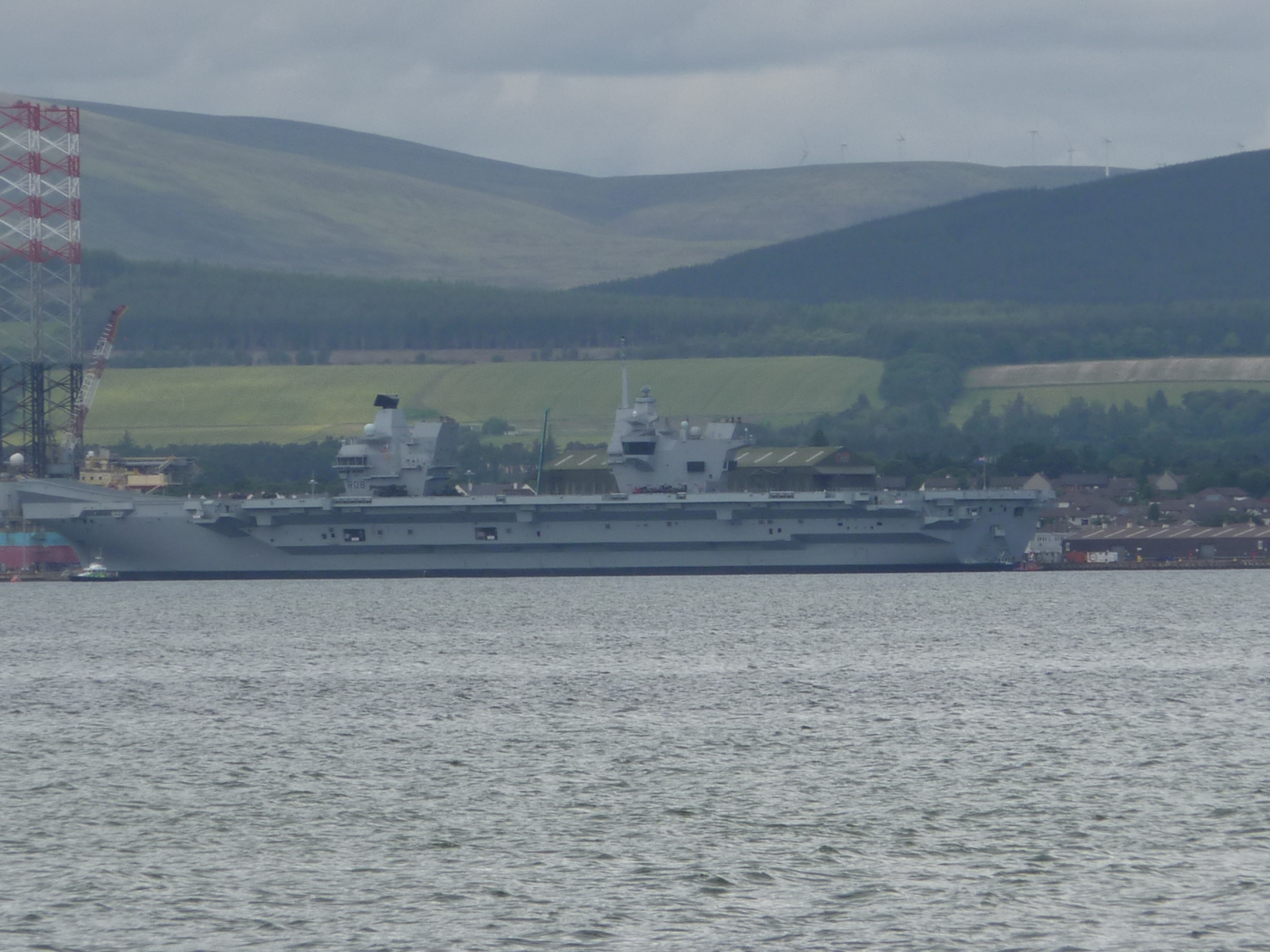
A full day over on the Black Isle reinforced how wonderful this part of Scotland is and whilst driving around look what I saw
The new aircraft carrier is a huge beast :)
Cromarty is a beautiful village full of 18th century buildings and this caught my eye
Now onto the work bench
Fusiliers de Morliere are done and ready for basing and I've almost finished painting samples of my new French artillery crew.
I'm currently running a 1744 campaign which I hope to complete and write up in this years Wargames Annual but some snippets will appear here.
A stay in Cawdor with regular trips to the Cawdor Tavern was excellent.
A trip to the Clava Cairns, Culloden and Fort George were my must do's although I have to say my wife was most impressed by all.
A full day over on the Black Isle reinforced how wonderful this part of Scotland is and whilst driving around look what I saw
The new aircraft carrier is a huge beast :)
Cromarty is a beautiful village full of 18th century buildings and this caught my eye
Now onto the work bench
Fusiliers de Morliere are done and ready for basing and I've almost finished painting samples of my new French artillery crew.
I'm currently running a 1744 campaign which I hope to complete and write up in this years Wargames Annual but some snippets will appear here.
Monday, 19 June 2017
AMG17
The scenario was based on one published some time on Kevs wargames cabin blogspot and whilst his was designed for use with Blackpowder I amended it for use with the Honours Of War rules.
There has been a '45 amendment sheet posted on that particular forum and I used this as a core but found the need to tweak it both before and during the weekend.
In essence the scenario was
17th January 1746
After the hapless Cope was defeated at the battle of
Prestonpans on the 21st September 1745.
Charles Stuart’s jubilant army had invaded England.
But disparity in the Jacobite command and the thought of
facing fresh Govt troops under Cumberland had
forced the tired army back into Scotland.
The Jacobites knew time was running out, not enough help had
arrived from France.
They were short on everything, although their numbers had
swelled from the march into England,
powder, muskets and food were now the main concern.
News arrived at Charles Stuarts camp that Cumberland
had been re-called to London.
This was to organise the defence of the capital as rumours
of a potential French invasion were rife and London was in a panic.
The command of the Govt troops had now fallen to Lieutenant
General Henry Hawley.
Hawley advanced with fresh troops to Edinburgh where he met with Generals Cope and
Wade.
Hawley, also had a problem, he needed to garrison his supply
route to Edinburgh
if he was to advance against the Jacobite main army.
He knew the Jacobites were massing at Perth
and had now begun the siege of Stirling
castle.
He decided to move most of his army to Falkirk in an attempt
to relieve the Siege at Stirling.
He sent what was left of Cope’s force to occupy Falkirk and prepare the supplies for his arrival.
General Wade was sent North of Falkirk to clear the area of
Jacobite sympathisers.
Hawleys force was spread out, he had no intelligence to say
that the Jacobites had moved from their siege of Stirling.
Wade’s Dragoons were camped and had spent the night in
Polmont, enroute to Falkirk.
Hawley would arrive later in the day.
This was indeed good news to the Jacobite command.
Hawleys army was divided.
The weather had been bad, but much needed supplies were
available and news that Cumberland was now on
his way back up to Scotland
with a large force of veterans from Flanders
had just been confirmed.
The Jacobites needed to strike now.
If the Govt troops could be destroyed, it would leave Edinburgh open once again
to a Jacobite entry to the capital.
This would certainly bring the French into full support of
the Stuart cause and a French invasion of England would be a real
possibility.
and so the scene was set
I
ran the game three times over the two days with three players on the
Jacobite side and two on the British and it was fascinating to watch the
different approaches to the game, in essence in game 1 the Jacobites
won a marginal victory despite having 4 of their 6 commanders as
'dithering' they managed to take Falkirk and prevent Hawley's
reinforcements deploying en masse.
The
other two games saw the Jacobites run out of steam just as victory was
in their grasp. What was 'entertaining'! that in both of these games the
Jacobites faltered ( threw a 1 on their command roll) at critical times
in the game on some occasions repeatedly! Who said there are no dice
gods. In the last of the games the Jacobites had thrown well having only
two unreliable commanders and yet Lord Elcho and the Jacobite horse (
dependable commander) threw a 1 two bounds in a row and halted aloowing
the British 3 pounders to throw shot down their line and rout Pistligo's
horse and weaken the command before they could engage with the British
dragoons.
At
the same time having caused morale failures on the British in Falkirk
and leaving the best part of the town open to be occupied the Jacobites
failed to advance two bounds in a row again resulting in them being hit
by grape from a British 6 pounder
Photos from game 1
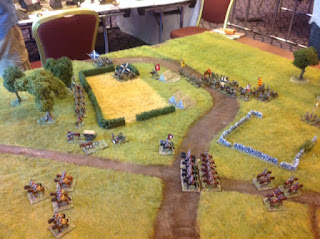
| The Jacobite cavalry engaged 'inferior' British Dragoons |
| Jacobites close in on Falkirk - Irish piquet hold the left flank |
| Falkirk under pressure as the British fall back |
| Jacobite deployment game 2 |
| Falkirk falls |
| General Wade threatens the Jacobite flank |
| British dragoons run back to their horses as their camp is over run |
Colin and Robbie (http://www.carryingsonupthedale.com/) presented the Battle of Leuthen
and Martin Gane presented another trip into the Sudan
More pictures on the highlighted blogs. As you would expect I didn't get much chance to take photos of the other games during play.
All in all a most excellent weekend, great games, superb company and hospitality. Here's hoping we can reunite next year.
Subscribe to:
Posts (Atom)